Active Properties

First Class Real Estate Services

Browsing Posts tagged FICO

Credit scoring is a system creditors use to determine whether to extend credit to potential borrowers.

Credit scoring takes into consideration a variety of information obtained from credit applications and credit reports, including bill-paying history, outstanding debt, age of accounts, and other information. Using a statistical program, creditors compare the compiled information to the credit performance of consumers with similar profiles.

A credit scoring system awards points for different factors, and the total number of points, or credit score, is useful in predicting how likely it is that a consumer will repay a loan and make on-time payments.

Using a credit score is one way for lenders to be more accurate, consistent, and objective in their underwriting policies. Because credit scoring is an objective system based on real data and statistics, it is considered more reliable than subjective or judgmental methods or criteria that has not been systematically tested. The Equal Credit Opportunity Act does not allow credit scoring systems to take into account certain characteristics, including race, gender, marital status, religious affiliation, or national origin.

Two large investors in mortgage loans, Fannie Mae and Freddie Mac, say credit scores are proven to be good predictors as to whether a borrower will repay a loan.

Lenders typically evaluate a loan application based on a borrower�s ability and willingness to repay a loan. A borrower�s ability to repay is based on information like current income and stability of past earnings. Willingness to repay a loan is evidenced by past credit history�in other words, someone who has made payments on time in past is more likely to do so in the future.

For most lenders, a credit score is only one of the many factors in the evaluation process. Lenders do not generally deny a loan because of a a low credit score alone�other factors can make up for a negative credit score and underwriting decisions are rarely made based on a credit score alone.

What is a FICO Score?

A FICO Score is a type of credit score developed by Fair, Isaac & Company using credit bureau information.

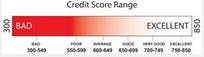
FICO scores range from about 350 to 900, with higher scores indicating lower probability of default on a loan.

Although the FICO Score may be the most wellknown, there are other credit scoring companies, and the national credit bureaus may construct proprietary credit scores as well.

Lenders use the credit score as a tool to predict the risk of a consumer defaulting on a loan. Until recently, only lenders and others who grant credit could gain access to these scores; now, however, consumers can see their own FICO score and learn about how to improve their credit score. FICO scores (and other credit scores), however, are not part of a consumer’s credit report.

The higher a borrower’s FICO score, the less risk the borrower is to the lender. For this reason, consumers with higher FICO scores can sometimes qualify for larger loans or more favorable interest rates.

Credit scores and loan pricing

Many lenders use credit scores as one of the factors in determining the price of a loan. The price of a loan is the interest rate and the points charged by the lender, which can both fluctuate lower or higher depending on different factors.

Credit scores may help determine the price of a loan because a borrower who has demonstrated ability and willingness to repay a loan is a lower credit risk. Borrowers with lower credit scores may still get a loan, but they may pay a higher price because the tender assumes a higher risk of default or loss on the loan.

Other factors also help determine the price of a loan, including property type, property value, the type of loan, the lender�s actual costs in making the loan, and borrower�s equity in the property. For example, a borrower making a 5% down payment may pay a higher loan price than a borrower putting down 20%, since more equity in a property generally means a borrower has greater incentive to make the payments and make them on time.

How are credit scores determined?

Different lenders may use different scoring models for determining a credit report score, so different models may weight questions differently, but a scoring model generally evaluates the following types of information:

Payment history: Bills that are paid late or referred for collection will reflect poorly on credit score, as will a bankruptcy.

Outstanding debt: Many scoring models evaluate the ratio of debt to credit limits. If the amount owed is at the upper limits of available credit, it may have a negative impact.

Length of credit history: Some models consider the amount of time a borrower has had a credit history. An insufficient credit history may have an effect on credit score, but payment history or low balances may offset a short track record.

Recent credit applications: Too many recent inquiries to a person�s credit report can indicate they may have opened many new accounts, which can negatively affect credit scores. However, �prescreened� credit offers and inquiries by companies that regularly monitor accounts would not be counted against a credit score. Credit inquiries remain on a credit report for two years, although only the previous 12 months are considered for credit scoring purposes. Requesting a copy of a persona�s own report does not count as an inquiry, and multiple inquiries for a similar loan (for example, a car loan) within a 140-day period generally are counted as a single inquiry.

�Number and types of accounts: Established accounts are important in creating good credit scores, but too many credit card accounts can have a negative impact on a credit score.

FICO scores take into consideration five main categories of information, and each is weighted according to importance. Payment history generally makes up 35% of the total score, and amounts owed makes up about 30% of the score. Other categories include length of history (15%), new credit (10%), and types of credit (10%).

You are more than your credit score…

In addition to credit scores, creditors sometimes evaluate applicants based on additional information: capacity, collateral, and character.

Capacity is the term used to describe how much debt a given borrower will be able to repay. To determine capacity, a lender may look at how long a borrower has been on their current job, whether they work in a stable industry, etc. They also look at current debt-to-income ratio, what kinds of debt the borrower carries (secured vs. unsecured), etc.

Collateral includes a home, property, mutual funds�anything the borrower could use to secure or repay a debt. A borrower with a late payment history may find having enough collateral is critical to obtaining a loan.

Character seems like a subjective call, but it can be evidenced objectively in certain matters, including how long a person has been at their current job, how long they�ve lived at their current residence, and whether they have a checking or savings account.

How can a borrower improve his credit score?

Since credit scores rely on credit report information, consumers should first check their credit reports from all three national credit bureaus, and then take steps to remove inaccuracies and improve their credit reports.

Making timely payments is key. Credit reports can be improved when consumers pay off collections and past due amounts, pay down loan balances as much as possible, and not take on any new debt. It may take some time for scores to improve significantly most scoring models look for a 12 year period with no late payments, no past due payments, and no derogatory items on a borrower’s credit report.

Consumers can also minimize the number of credit inquiries (which can have a derogatory effect on credit scores) by applying for credit only when it is absolutely necessary.

Finally, it is important to remember that different lenders have different strategies, so, while a higher credit score equates to a lower risk, there is no overall cutoff point to determine whether a borrower will receive credit. Different lenders have different levels of risk they find acceptable for certain types of credit products, so different lenders may have different products available for borrowers with a lower credit score.

Tips for keeping good credit

There is a multitude of advice for consumers who are trying to clean up their credit, but rarely do those with good credit hear about how to maintain it. Here are a few tips for those who already have great credit reports:

Rather than going over a card’s limit, ask for an increase.

Promptly notify creditors of changes in address, so bills arrive on time.

Acquire and use only the cards you need. Even if you’re not tempted to use them, creditors often frown on too many unused cards.

Scrutinize pre-approved cards and other credit offers. Don’t apply because of rebates or other gimmicks; instead, make wise choices based on interest rate, annual fee, and grace periods.

Disclaimer: This communication is designed to provide accurate and authoritative information in regard to the subject matter covered. It is distributed with the understanding that the publisher is not engaged in rendering legal, accounting, or other professional service. If legal or accounting advice or other expert assistance is required, the services of a competent professional should he sought.

Cliff Daniels

Actprop.com

Removing Some of the Mystery about Credit Scores

Fair, Isaac Co., the major provider of credit scoring systems to lenders, has revealed how it determines credit scores, also known as FICO scores. Many lenders use these scores to predict how likely a borrower is to repay a loan.

There are five main factors that influence your FICO score:

Payment History

Payment history accounts for about 35 percent of your score. Paying your bills on time is the best way for you to receive a high FICO score.

Your Current Debt

About 30 percent of your score is determined by how much you currently owe. If you owe a lot of money in relation to your available credit limits, you may appear to be over extended. The key is to keep balances low on unsecured debt such as credit cards. Even closing unused accounts may not improve your score.

Applications for New Credit

Applying for several credit accounts in a short period of time could indicate that you may soon be over extended and may lower your score. This is about 10 percent of your score.

How Long You’ve had Credit

The longer you�ve had credit and handled it responsibly, the better your FICO score will be. The length of your credit history accounts for 15 percent of your score.

Your Credit Mix

The final 10 percent of your score is determined by the kinds of credit accounts you have credit cards, retail accounts, installment loans, finance company loans and mortgage loans and how many of each.

There are other elements, mostly subcategories of the items listed above, that go into your score, including your occupations, time at present job, time at your current address, home ownership, and much more. For more information or to obtain a copy of your FICO score, visit www.fairisaac.com .

Cliff Daniels

Actprop.com